During the National Day holiday, I went to the emergency room for an ECG and a troponin blood test.
Seeing the nurses and doctors working through the holiday, I decided to go to 7-Eleven, buy twenty buns, and bring them back for the staff.
A nurse graciously accepted them and gave me a big smile.
I was so happy! I had wanted to brighten their day, and they brightened mine, too.
When they accepted my gesture, I realized they were my Daymakers.
I offered the buns. She offered a smile. We became each other’s Daymaker. This is what I mean by The Generosity Loop.
I Make You Happy Because It Makes Me Happy
I do not particularly like saying that we “help others.” Sometimes it makes the giver seem to stand above the receiver, who is then left owing a favor.
I do not think of myself as particularly noble. Seeing someone happy because of a small gesture makes me happy. That happiness makes me want to continue.
I call this Enlightened Egoism.
“I don’t believe in altruism. I believe in enlightened egoism: I make you happy because it makes me happy.”
This is how I understand my own motivation. Generosity can mean time, experience, money, or patiently listening until someone has finished speaking. As I give, my own life becomes richer.
You Can Be Their Daymaker, Too
But what I especially want to talk about this time is receiving.
In the Chinese culture I know, we often feel too shy or too concerned about politeness. Someone offers a coffee or a small gift, and our first response is, “No, thank you!” or “Please don’t go to any trouble!”
Sometimes we actually like the offering, but still refuse first.
If the gesture is welcome, why not receive it graciously? Smile, offer a sincere thank-you, and let the person know you are happy. Now they are happy, too! You have become their Daymaker.
There is no need to start planning a gift in return. That nurse’s big smile had already made me happy.
Receiving kindness can itself be an act of giving.
Notice What Someone Does Well—and Say It
I want to turn this thinking into a movement anyone can participate in: Catch someone doing something good.
Pay attention to the people around you. Who has been patient? Who has thought one step ahead for someone else? What small act of care has made life better for the people nearby?
When you notice it, let the person know. Be specific about what you appreciate, so they know their thoughtfulness was seen.
And when someone appreciates you, practice receiving it warmly. Both giver and receiver can make the encounter better.
It Is an Art and a Science
Brightening someone’s day takes observation. When should you speak? When should you simply be there? Is what you want to give what the person needs at that moment? These judgments take practice.
Receiving does, too. How can you express thanks so the other person feels your delight, rather than just hearing a polite response?
The art lies in sensitivity, timing, and warmth. The scientific attitude is to observe our responses, learn from them, and adjust. It is not enough for me to think I did something well; I also need to pay attention to how the other person actually feels.
The loop I hope to cultivate is this: you give, I receive graciously, and my response brings you happiness. That shared experience makes us both want to continue. Next time, perhaps we carry that kindness into another encounter.
A Daymaker has an opportunity to become a Ripplemaker.
From a Smile to Sustained Generosity
This is the kind of human interaction I want to advocate. A more humane civilization can begin with these small practices.
This is also the foundation I hope to build for GPC, GR, and RR. As we become familiar with the happiness of giving and receiving, we can consider how much of our annual income and accumulated wealth might support work worth sustaining. These measures then connect with how we live.
GPC concerns charitable giving per person in a society. GR concerns the proportion of annual income donated. RR concerns the share of assets arranged for future public purposes. I explain these ideas more fully in GPC, GR and RR: From Die with Zero to Die with Purpose.
Everyday kindness will not necessarily lead to financial giving, and our capacities and responsibilities differ. My hope is to make room for more ways of practicing generosity. The Archangel Initiative’s regular contributions are one example: a lasting commitment that worthwhile work can rely on.
For me, these practices connect with Die with Purpose: using the time and resources we have to leave the world a little better through our participation.
Giving thoughtfully and receiving graciously. Both are worth learning.
That day, I bought twenty buns. A nurse gave me a big smile. That was how the loop began.
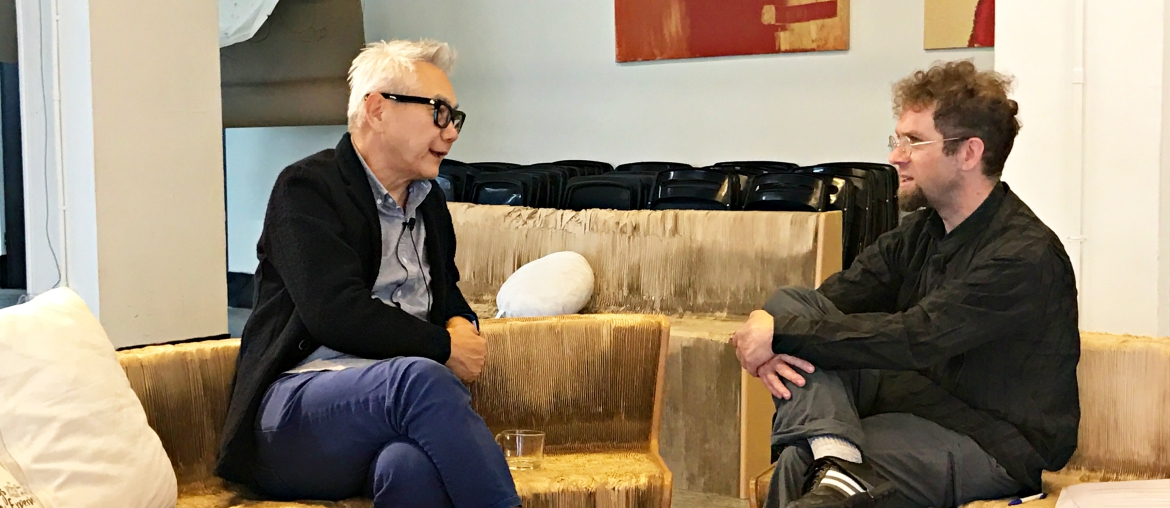
“Chu Ping is not your typical interview subject. Our conversation (which at times crossed the line from Ted Talk to Tony Robbins seminar) ranged from tourism to art, capitalism to futurism, poetry to human rights. Chu Ping (or simply Ping to friends, and since Ping regards friendship as a most cherished value that’s how I’ll be referring to him here on in) is a modern-day Renaissance man, with a field of interest as difficult to summarize as that of revered American theorist, author and and designer Buckminster Fuller.”
photo credit to Red Room Taipei
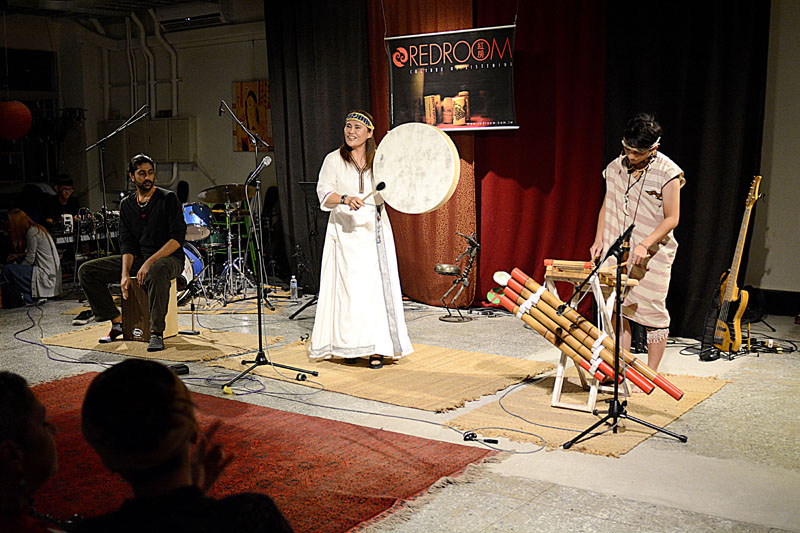
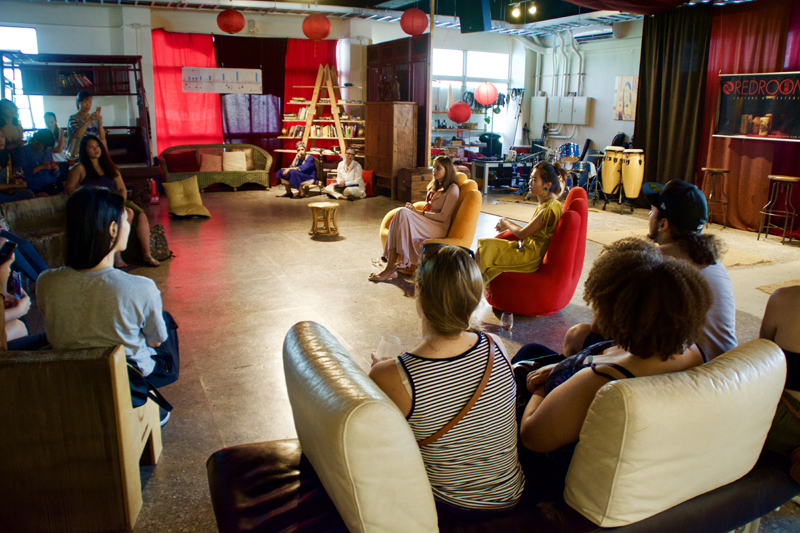
Among Ping’s current pursuits are Forward Taiwan, an organization dedicated to strengthening Taiwan’s global economic position through efforts to improve national immigration policies and Happier Lab, a social innovation group promoting co-creation in a variety of fields. And this merely scratches the surface of Ping’s activities. He’s also the co-founder of Taipei’s Red Room, an ever-expanding community gathering/performance space. And this barely scratches the surface.
I met up with Ping for an interview at Happier Lab headquarters. I’d barely sat down before Ping began interviewing me.
“Are you doing what you love in life?” He asked, his trademark gravelly voice adding gravitas to the question.
It was a good question, though unexpected.
“Well, I love promoting tourism in Taiwan,” I answered.
Ping laughed. “You don’t need to promote tourism in Taiwan. Just let people know how happy you are here. The important thing is to promote Taiwanese values.”
Promoting Taiwanese values are at the core of everything Ping does, and the subject would come up throughout our 90-minute conversation.
“Fair enough,” I replied. “But seeing as I work for a travel company, which specific Taiwanese value should I be promoting?”
“Ren qing wei,” he answered.
Like many multi-layered concepts, ren qing wei defies simple translation. But the conversation was already getting into deep territory, so I asked Ping to translate it nonetheless.
“It’s hard to translate. Like xiao long bao. Steamed dumplings, right? But so much flavor gets lost with that translation. I guess you could translate it as hospitality, though really that word doesn’t do it justice. Ren qing wei is so more than that. Trust, empathy.”
As Ping fished for words to do the term justice, I snuck a peek at Google translate, which rendered the phrase as “Human Touch”.
“It’s a good start, but it is more than that. Honestly, it’s something you need to experience to understand. From your point of view as a travel company, you should promote Taiwan as an ideal society, a place where people not only trust each other but also treat visitors like family members. We must live this concept, for example…”
At this Ping looked up and addressed my colleague April, who was behind the camera.
“As a Taiwanese, what have you done today to specifically promote the concept of ren qing wei?”
April shrugged. She’d expected her part in the assignment to remain mostly technical.
“For example…?” She asked.
“You see a foreigner who looks lost. Do you reach out and try to help them? Do you stop and say what can I do for you, where you want to go. It’s on my way, I’ll take you there.”
Ping was referring to a phenomenon well known to any long-term expat in Taiwan who’s ever spent more than 30 seconds looking at an MRT station wall map. It’s an old chestnut, but as Taipei has become more internationalized, I’d noticed it happening less.
Ping wasn’t deterred in the least when I mentioned this.
“Maybe we should do a social experiment, film a few foreigners standing by subway maps, put the result on the internet. That would be some good promotion. Anyway, I don’t want people to be indoctrinated, even by this article. Taiwan is the best-kept secret in Asia. Come here with an open mind, Visit for a while. Maybe you’ll stay for the rest of your life.”
Which proved a good segue into another of Ping’s passion projects. Because if bringing people to Taiwan is our passion as a travel company, keeping them here is Ping’s, and he was eager to talk about the great strides recently made to that effect in the Taiwan legislature, partially as a result of the work of another project he’d long spearheaded, Forward Taiwan, whose years of lobbying was on the verge of bearing fruit in the form of actual legislation.
“I’m very happy to share with everyone the fact that Taiwan has just passed a new law. On the surface, it’s set up to recruit talented people to Taiwan, but our hope is that in addition to doing that it’ll help encourage people who are already in Taiwan to stay by providing a clear roadmap for how immigrants can make their lives in Taiwan, not just for the short term but for the long term.”
Ping was referring to issues faced by many expatriates who’ve chosen to settle in Taiwan. While the majority of foreign-born Taiwan residents enjoy some of the same social benefits as Taiwan born citizens, there are still gaping holes in the social safety net, specifically in so far as residency benefits for children and inclusion in retirement programs and pension schemes. He expressed hope that the new laws will close some of these gaps.
“Look, the government legislators understand that the only way we can attract new talent is through the referrals of people who already live here. The new laws now being worked out are going to do a lot to keep the people who are in Taiwan already to stay here. It’ll offer a clear roadmap for how immigrants can make their lives in Taiwan.”
Changing the way that Taiwan thinks about the concept of Talent – at least insofar as immigration policy is concerned – is another of Forward Taiwan’s purposes.
photo credit to Forward Taiwan
“Right now there are only two ways to describe talent in Taiwan. One is salary, and the other is college degree, which is really an outdated way of thinking. What about artists? What about people without a degree from a so-called top 500 university? There are so many people who have so much of what Taiwan is looking for insofar as creativity and innovation, cross culture and diversity that it makes no sense to restrict the talent pool like this. So we’re trying to change the laws, trying to open things up to allow for a more inclusive visa system for artists, social organizers, long-term caretakers for the elderly. Things are changing, of course. We need to attract more talent to Taiwan.”
As we continued speaking, it became clear to me that Ping’s interest in attracting foreign talent to Taiwan was only partly based on Taiwan’s business interest. There was also a streak of patriotism, a desire to show off the achievements of his nation far and wide.
“Taiwan is a civilized society, a society that offers health care to all its citizens. This is part of ren qing wei, our social responsibility. People take care of each other here, and that is a big part of why Taiwanese society is generally happy. Now in America, people are held hostage by their jobs. If they leave, they lose their healthcare. This is thankfully not the case in Taiwan. We regard healthcare as a human right, and we want everyone in the world to know this. So yes, we want people to come to Taiwan as tourists, but to stay, to make Taiwan a second home.”
“What about the language issue?” I asked. “A lot of foreigners find learning Chinese difficult.”
Ping shrugged it off.
“The best way to learn Chinese is to be there, hang out in a Chinese speaking environment,” he said. “Anyway, being bilingual is a way to expand your brain. In any event, many people in Taiwan have good English proficiency.”
There was, of course, some truth to this. People who travel around Taiwan often come away with similar tales of taxi drivers, small-town train depot ticket sellers, and random strangers throughout the island able to speak English ranging from passable to surprisingly fluent. But according to Ping, Taiwan could be doing better on this front. Much better.
Enter, the Moonshot Program.
“The name is based on JFK’s famous proclamation about landing America on the moon inside of ten years,” Ping explained. “Everyone thought it was a pipe dream, but it happened. Well, our dream is to make Taiwan a bilingual country, with English as one of our official languages 33 years from now, by the year 2050.”
I told Ping that this seemed impossible.
“It is not impossible!” He shot back. “Difficult, yes, but not impossible. We need 10,000 English teachers to come here and be spread out through the country, not just in the city’s but in the country.”
As to why Taiwan should adopt English as a second language, Ping points to the gap in Taiwan between ‘those who can command English and those who cannot’.
photo credit to Red Room Taipei
“People who aren’t bilingual in Taiwan will always be behind the curve. Knowledge is power, and those who can’t command English are more prone to being sycophantic, yet at the same time, they’ll be more xenophobic. I don’t want to see that. The time for protecting Taiwan from outside influences is over; the younger generation are the ones that need to make this happen as the older generation, the more conservative fundamentalist generation, the myopic people, they’re dying out. It’s up to the younger generation. By promoting a bilingual Taiwan, we are focusing on the strength of Taiwan, our openness, and flexibility.”
Promoting Taiwan, and increasing the open society access of Taiwan, is at the core of much of what Ping puts his energy into, from Forward Taiwan and Red Room to more esoteric and far-reaching endeavors like the Moonshot Program. But facilitating change within Taiwanese society is another part of what drives Ping, and in this aspect, there is also something of the gentle revolutionary in him. Not in the Che Guevara or Chairman Mao model, but in the way of Buckminster Fuller, who Ping quotes to describe his own philosophy of social change.
“As Buckminster Fuller said, ‘You never change things by fighting the existing reality. To change something, build a new model that makes the existing model obsolete.’ Red Room is this model, a platform from which artists to launch their passions. Forward Taiwan is another platform from which people in Taiwan can effect meaningful change. We’re not about demonstrating in the streets, leave that to other people. We’re creating a platform for the silent majority.
Our conversation had been going on for nearly 90 minutes, and I’d not yet gotten to half of my prepared questions. With time growing short, I decided to skip down to the final item my list. It wasn’t a question so much as a quote, and though it was too broad to associate with any one person since I’d heard it first researching Ping’s writing I thought I’d end by asking him about it.
“You’re fond of saying to accomplish the extraordinary you must interact with extraordinary people. From a travel standpoint, how does one make this kind of serendipity happen?”
Ping thought about it for a moment.
“In my experience, the most extraordinary people I’ve met have been those strangers with whom I’ve just clicked. 20, 30 years later, I still remember these chance encounters. There’s no real formula for this outside of going outside and making things happen. You don’t create extraordinary experiences by sitting at home.”
“And you don’t turn strangers into friends by sitting at home either,” I added.
Ping laughed.
“Not usually. But travel is a great way to do that. Or just come to the Red Room.”
這也是為什麼我跟台灣年輕的新創網路創業人說,要專注在端對端的服務(End to End Service Solution),而不是賣產品,否則唯一的商業模式就是賣給大型網路公司。最近AlphaGo 更是一個大突破,代表AI, Machine Learning, 及新一代的Robot 及Robot Advisor 會改變整個世界。尤其對“工作”的定義及“人力”的需求都會有巨大的影響。